
Perfume education
What Happens While Perfume Rests?
Resting gives a perfumer time to smell a blend again. Wearing a sample helps you notice what you love and what you might like to change.
October 10, 2026 · Logbook entry
A freshly made perfume gives a first impression, but there’s more to learn before deciding it’s finished. Does it have the warmth you imagined? Is the sweetness comfortable? Do you still enjoy it after wearing it for a few hours?
Giving a fragrance time allows its maker to return to it, smell it again, and decide whether anything needs adjusting. For a perfume made especially for you, your experience of wearing it matters just as much.
Time to smell again
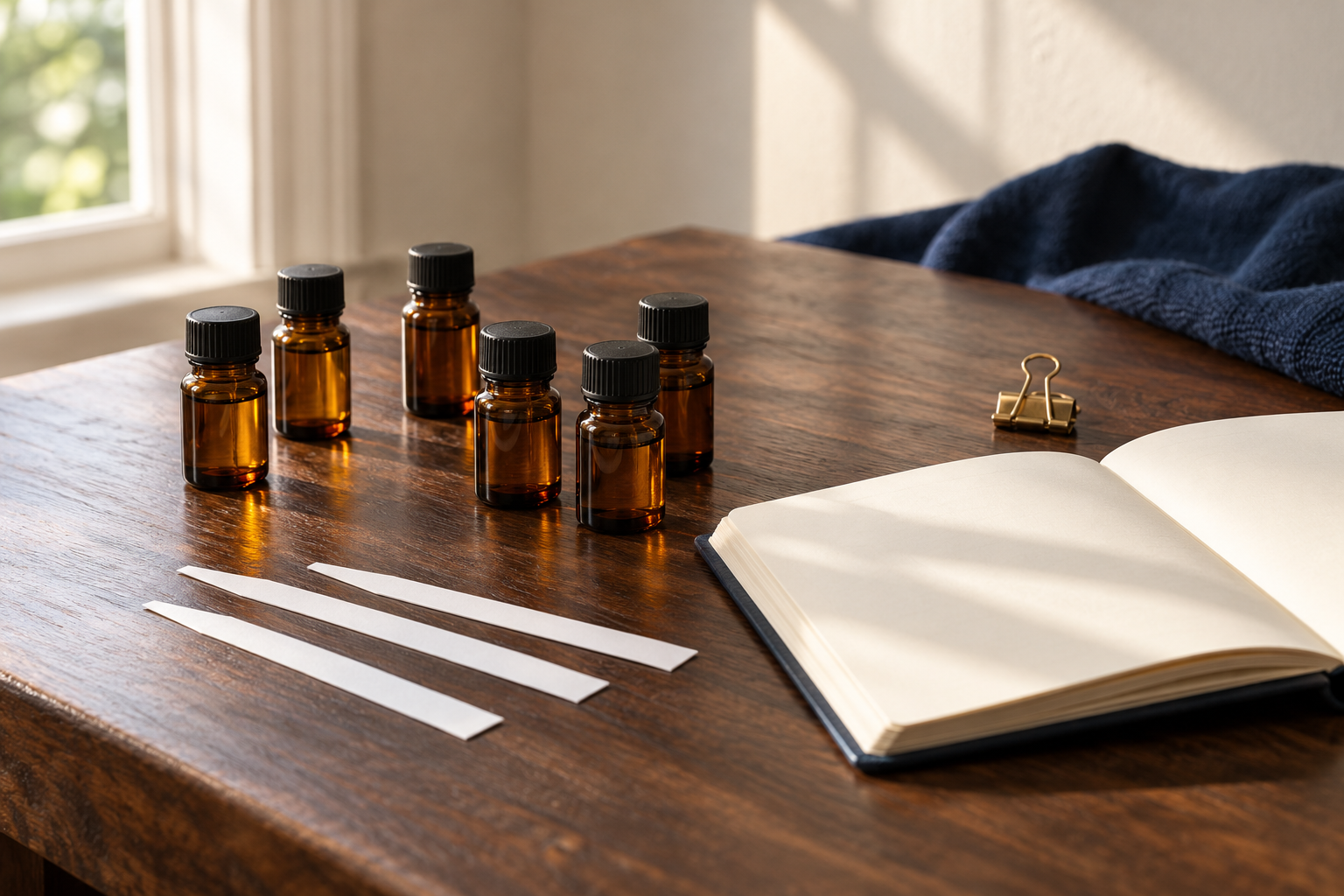
After blending, a perfume may be set aside before it is assessed again. You might hear this called resting or maturation. The scent can change during this period, so the perfumer checks how it’s developing rather than relying only on the first smell.
The timing depends on the perfume, and leaving it longer doesn’t automatically make it better.
Coming back to a blend also gives the perfumer another opportunity to consider the balance. Perhaps the woods feel more prominent than intended, or the sweetness needs a lighter touch. Smelling, comparing, and making considered adjustments are part of finding the right result.
What happens when you wear it?
Resting in a bottle is different from the way perfume unfolds on your skin. Once you spray it, some parts fade more quickly than others. A bright, fresh beginning might gradually give way to soft flowers or warm woods.
That’s why a quick sniff can only tell you so much. Try a sample during an ordinary day. Notice the first impression, then return to it later without feeling you have to analyze every moment.
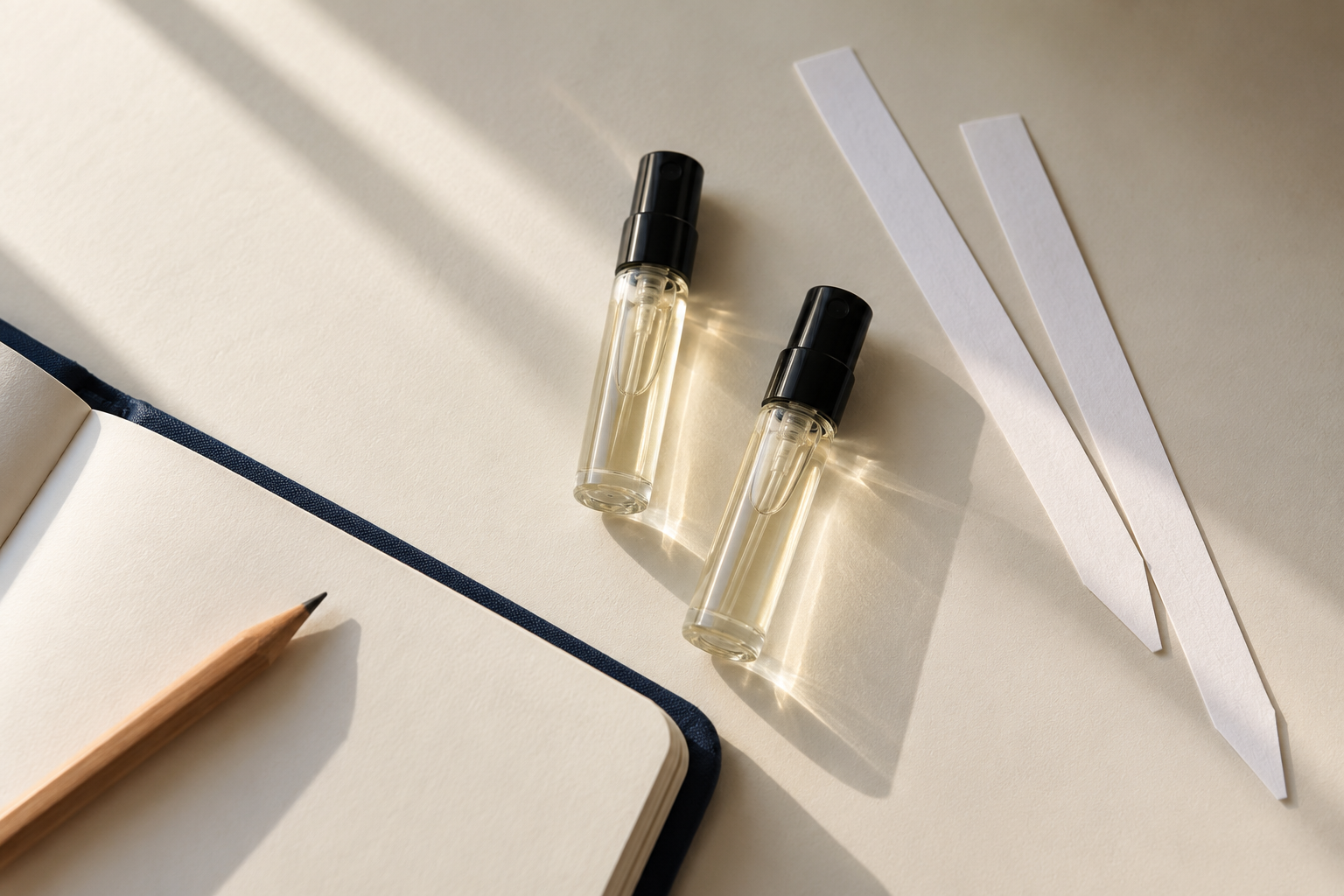
Try a sample during an ordinary day and note what you notice.
A few plain words are enough: “I loved the beginning,” “It felt too sweet by lunchtime,” or “The softer scent later on was my favorite.”
Your part in a bespoke fragrance
At Deep Seapothecary, the bespoke process includes a 2 mL sample to wear and one included revision. This gives you a chance to live with the fragrance and share what you’d like to keep or change before approving it.
You don’t need to name individual ingredients. How the perfume feels to you, and whether you want to reach for it again, are valuable things to know.
Sources (2)
- Frédéric Malle on choosing a resting process for each perfume · www.fredericmalle.co.uk
- Research on how perfume unfolds on skin · pubmed.ncbi.nlm.nih.gov